Monthly Archives: August 2026

DVT Mobility Research: Better Decisions for the Patient


Show Notes

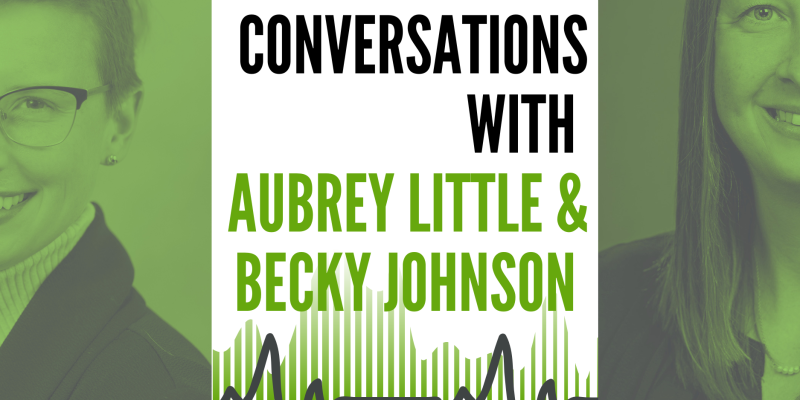
Should an acute lower-extremity DVT automatically stop mobility when anticoagulation is subtherapeutic? In this episode, Dr. Leo Arguelles and Dr. Nicole Neveau speak with Aubrey Little, PT, DPT, CCS, and Becky Johnson, PT, DPT, PhD, about the clinical question that grew from a quality-improvement project into a case-control study published in the Journal of Acute Care Physical Therapy.

Little and Johnson explain why a single laboratory value or protocol checkpoint cannot replace a comprehensive assessment. They discuss weighing the risks of immobility against potential adverse events while considering clot location, medical acuity, hemodynamic status, medications, laboratory trends, discharge pressures and the patient’s overall trajectory. The conversation also explores the documentation needed to make clinical reasoning visible and the value of bidirectional conversations with the interdisciplinary team.

The study included 30 patients and 60 physical therapy sessions. Its findings do not establish that mobilization at subtherapeutic anticoagulation is universally safe. The researchers emphasize the limitations of a small retrospective sample and their inability to determine whether pulmonary embolism occurred. Instead, the episode offers a thoughtful look at risk stratification, evidence-informed judgment and how clinicians can question automatic holds without abandoning patient safety.

Listen now on Apple or Spotify.

Today’s Guests:

Aubrey Little PT, DPT

aulittle@gmail.com

Becky Johnson PT, DPT, PhD

rjohns1@midwestern.edu

https://www.linkedin.com/in/rebecca-johnson-pt-dpt-phd-619244112/

Guest Quotes:

10:07 Aubrey “ I think that’s the intention of this paper is to really think about the patient more holistically as opposed to basing clinical decision-making off of one data point or one factor.”

13:09 Aubrey “ if somebody is working in an outpatient clinic, maybe they just had a knee replacement or a hip replacement and their suspicion for an acute DVT. Does that mean that we are going to, in the moment, suggest this person is fully immobilized, call the ambulance, call the stretcher- … you cannot walk on this limb until you make it to the hospital.”

19:18 Becky “ And so when we look at the adverse events that did occur, in retrospect we’re questioning, was that an adverse event? I think if you were the clinician treating the patient, you would’ve said no. But it did meet our criteria for that.”

Rapid Responses:

 Do either one of you guys know what your theme song would be if you got to have a theme song every time you walked into the room at the hospital?

 Aubrey:” I would say September by Earth, Wind & Fire just ’cause that song immediately makes me dance.”

Becky: “ Maybe the songs like, Look Who’s, Guess Who’s Back Again. Eminem.

 You know you’re an acute care or an ICU provider when…

 Aubrey: “You ask yourself, “Is one month too short to buy a new pair of shoes for work?”

Becky: “ When you’ve got at least 8,000 steps by the time you get done with your shift.”

Links:
Incidence of Adverse Events When Mobilizing Patients With Acute Lower Extremity Deep Vein Thrombosis at Subtherapeutic Anticoagulation Level: A Case–Control Study

🎧 Connect with Our Hosts

Leo Arguelles (pronounced LEE-O R-GWELL-IS)

📧 largue2@uic.edu

🐦 Twitter: @LeoArguellesPT

Nicole Neveau, PT, DPT, NCS

📧 ngunder1@gmail.com

🔗 LinkedIn: Nicole Neveau

Danny Young, PT, DPT, PhD

📧 daniel.young@unlv.edu

🐦 X: @DLYoungDPTPhD

🌐 Bluesky: @dlyoungdptphd.bsky.social

🎧 Listen now on Spotify | Apple Podcasts

(Or wherever you get your podcasts)

#AcuteCare #PhysicalTherapy #HealthcareLeadership

Interested in being a future guest?

APTA Acute Care “Optimizing Recovery, Elevating Care”

Website

Awards

Journal Access

https://www.aptaacutecare.org/page/AspireandAchieveMentorshipProgram

Twitter @AcuteCareAPTA

Facebook APTA Acute Care

Instagram @AcademyAcutePT

YouTube  APTA Acute Care Podcast

APTA Acute Care Resources

APTA Adult Vital Signs

APTA Lab Values Document

Webinar Recordings


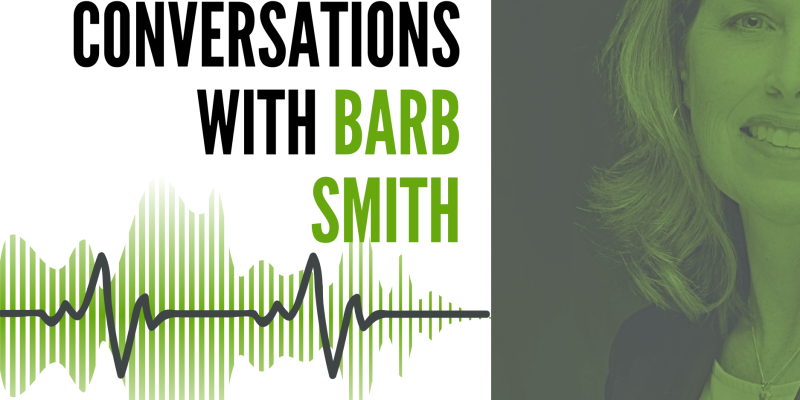
Barb Smith on Pioneering Research for Better Acute Care


What does it take to move acute care physical therapy research from the journal page to the bedside?

In this episode, Dr. Leo Arguelles and Dr. Daniel Young sit down with Dr. Barbara “Barb” Smith, associate professor of physical therapy at the University of Florida, clinician-scientist with more than 25 years of ICU experience, and recipient of the 2026 APTA Acute Care Lecture Award.

Barb reflects on how acute care research has evolved from a time when PTs often contributed to studies without leading them to a future in which clinicians, educators and scientists shape the questions that matter most. She explains why research in complex hospital environments remains difficult, from varied patient populations and unit cultures to small single-site studies and the long delay between publication and clinical adoption.

The conversation also explores why research should function as a team sport. Barb shares the value of multi-site collaboration, early partnerships with frontline clinicians and hospital leaders, and sustained mentorship for emerging researchers. Drawing on her work in respiratory strength training, she shows how clinically relevant questions can grow into evidence that changes practice.

Listeners will leave with a clearer view of how collaboration, communication and curiosity can strengthen acute care research—and ultimately improve patient care.

Show Notes

Today’s Guests:

Barbara Smith PT, PhD

bksmith@ufl.edu

X: ilikebigbreaths

Guest Quotes:

16:24 “ But we still have some challenges, I think in the area of acute care research. Number one it’s hard to do , right?… And all of that noise can muddle up what might be a very, helpful or clear efficacy signal or rehabilitation signal. “Ah, this works.” But if we have all this other noise, we might not see that treatment effect. And so those are some threats sometimes to designing and developing and implementing research in this setting.”

18:54 “ Scientists, we’re not always the best conversationalists. And so disseminating our message, we use a lot of jargon, we use complicated terms…  so there’s a dissemination issue, there’s a consumption issue where where maybe people are getting their information from different resources, and are those resources vetted scientifically?”

27:11 “So this is my pie in the sky dream…I love the fact that this academy is supportive of science and moving our evidence base forward, and have been so supportive of providing some grant funding through the foundation. I would love to pull all that money together and give it in one big project to a bunch of groups of people. And then we do this together.”

Rapid Responses:

  When you’re out biking, Barb, how often do alligators come into the conversation?

 If you’re from Florida, never. If you’re not from Florida, every time.

 You know you’re an acute care or an ICU provider when…

 When your weekend and holiday schedule is more complicated than your fantasy football spreadsheet.

Links:

🎧 Connect with Our Hosts

Leo Arguelles (pronounced LEE-O R-GWELL-IS)

📧 largue2@uic.edu

🐦 Twitter: @LeoArguellesPT

Nicole Neveau, PT, DPT, NCS

📧 ngunder1@gmail.com

🔗 LinkedIn: Nicole Neveau

Danny Young, PT, DPT, PhD

📧 daniel.young@unlv.edu

🐦 X: @DLYoungDPTPhD

🌐 Bluesky: @dlyoungdptphd.bsky.social

🎧 Listen now on Spotify | Apple Podcasts

(Or wherever you get your podcasts)

#AcuteCare #PhysicalTherapy #HealthcareLeadership

Interested in being a future guest?

APTA Acute Care “Optimizing Recovery, Elevating Care”

Website

Awards

Journal Access

https://www.aptaacutecare.org/page/AspireandAchieveMentorshipProgram

Twitter @AcuteCareAPTA

Facebook APTA Acute Care

Instagram @AcademyAcutePT

YouTube  APTA Acute Care Podcast

APTA Acute Care Resources

APTA Adult Vital Signs

APTA Lab Values Document

Webinar Recordings