Monthly Archives: July 2026

Beyond ICU Survival: The Powerful Truth About PICS Recovery


Show Notes

Caring Beyond the Critical Care Phase

What happens after a patient survives the ICU—but recovery has only begun?

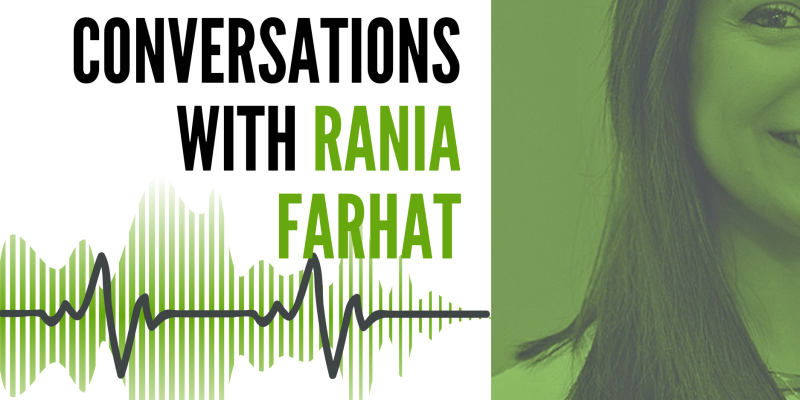
In this episode of Acute Conversations, hosts Dr. Leo Arguelles and Dr. Nicole Neveau welcome Dr. Rania Farhat, MD, MSHA, FCCP, an assistant professor of medicine at Saint Louis University School of Medicine and founder and medical director of the SSM/SLUCare Post-ICU Multidisciplinary Clinic. Together, they explore post-intensive care syndrome, or PICS, and why meaningful recovery must extend far beyond ICU discharge.

Dr. Farhat shares how her clinic grew from a once-monthly idea into a multidisciplinary program connecting critical care, physical therapy, occupational therapy, pharmacy and transitional care. The conversation examines the lasting physical, cognitive and emotional effects of critical illness, as well as the burden carried by families and caregivers.

Listeners will hear how the team uses measures such as six-minute walk distance, grip strength, cognitive screening and quality-of-life assessments to uncover needs patients may not recognize themselves. The group also discusses early mobility, plain-language education, care transitions and the challenge of expanding access when demand far exceeds clinic capacity.

This episode invites acute care clinicians to redefine success beyond extubation or ICU discharge and ask a more patient-centered question: What happens next? Recovery is a journey, and the work begins in the ICU but continues across every setting that follows.

Listen now on Apple or Spotify.

Today’s Guest

Rania Farhat, MD, MSHA, FCCP

Assistant Professor of Medicine, Division of Pulmonary and Critical Care Medicine, Saint Louis University School of Medicine

Founder and Medical Director, SSM/SLUCare Post-ICU Multidisciplinary Clinic

Medical Director, Pulmonary Embolism Response Team

Email: rania.farhat@slucare.ssmhealth.com

LinkedIn: Rania Farhat, MD, FCCP

X: @raniafarhat88

Guest Quotes

Timestamps are approximate. Quotes have been lightly edited for clarity.

8:00 — Dr. Farhat: “This is more of a recovery clinic than just, ‘Oh, ICU.’ This is about recovery. It’s a journey. It’s not one time only.”

10:00 — Dr. Farhat: “The transition and the recovery is a very long process. I make sure to mention that to patients and their families, because expectations matter.”

17:00 — Dr. Farhat: “I’m trying to connect the dots in your brain. I want them to understand what actually happened to them.”

24:00 — Dr. Farhat: “The perceived physical tolerance for patients is completely different from what they actually can and cannot do.”

35:00 — Dr. Farhat: “Anything that actually impacts patients’ lives and this long journey of recovery, I’m there for it.”

Rapid Responses

  • Favorite type of weather: Summer
  • Shoes for the acute care floors: Running shoes—Brooks or New Balance
  • Least favorite high school class: History
  • Another possible profession: Engineering, to fit in with her family of engineers
  • Favorite board game: Chess
  • Movie she can recite: A Walk to Remember
  • Favorite word in another language: “Alhamdulillah” in Arabic
  • Favorite meal after a long day: Lebanese food
  • You know you’re an acute care or ICU provider when: “I comment on every scene in a medical show.”
Episode Links

Critical and Acute Illness Recovery Organization

CAIRO Post-ICU Clinic Collaborative Directory

International Walk for PICS

Connect With Our Hosts

Leo Arguelles
Pronounced LEE-O R-GWELL-IS
Email: largue2@uic.edu
X: @LeoArguellesPT

Nicole Neveau, PT, DPT, NCS
Email: ngunder1@gmail.com
LinkedIn: Nicole Neveau

Danny Young, PT, DPT, PhD
Email: daniel.young@unlv.edu
X: @DLYoungDPTPhD
Bluesky: @dlyoungdptphd.bsky.social

Listen and Subscribe

Spotify | Apple Podcasts

Or listen wherever you get your podcasts.

#AcuteCare #PostICUSyndrome #ICURecovery #PhysicalTherapy

Interested in being a future guest?

APTA Acute Care

Optimizing Recovery, Elevating Care

Website

Awards

Journal Access

Aspire and Achieve Mentorship Program

X: @AcuteCareAPTA

Facebook: APTA Acute Care

Instagram: @AcademyAcutePT

YouTube: APTA Acute Care Podcast

APTA Acute Care Resources

APTA Adult Vital Signs

APTA Lab Values Document

Webinar Recordings


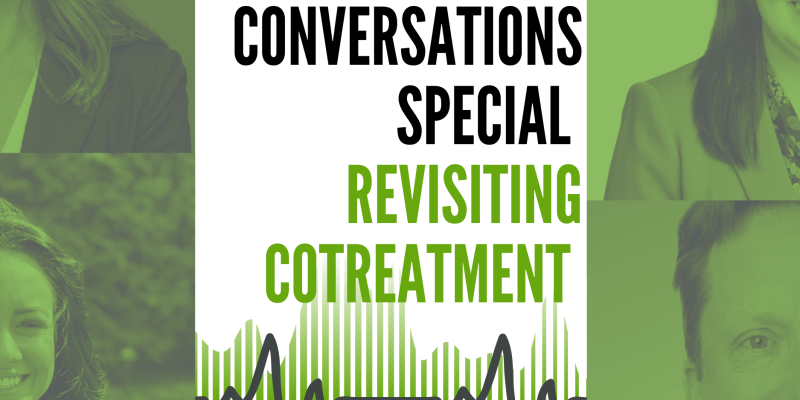
Together Isn’t Always Better: The Meaningful Shift in Co-Treatment


Show Notes

When does teamwork strengthen patient care—and when can it unintentionally limit it?

In this episode of Acute Conversations, hosts Dr. Leo Arguelles and Dr. Daniel Young welcome Haley Bento, PT, DPT, CCS; Harley Kvenvold, occupational therapist; Dr. Kathryn Brito, PT, DPT, CCS; and Brian Hull, PT, DPT, MBA, BCHE, to revisit PT and OT co-treatment in acute care. Building on a previous listener-favorite episode and their newly published clinical perspective, the panel examines why routine co-treatment remains common and how clinicians can move toward more intentional, patient-specific decision-making.

The conversation explores how co-treatment can affect therapy intensity, access to care and professional identity—particularly when occupational therapy is reduced to an extra set of hands rather than recognized for its distinct expertise. The guests also address the real-world factors that shape practice, including clinician confidence, limited support staff, productivity pressures, discharge demands and hospital culture.

Listeners will hear practical strategies for distinguishing a true need for two skilled disciplines from a need for brief physical assistance, strengthening ICU competency and mentorship, documenting clinical reasoning, and reassessing the need for co-treatment during every session.

The goal is not to eliminate co-treatment or shame clinicians who use it. It is to create a meaningful shift toward thoughtful collaboration that protects each profession’s unique value and better serves patients.

Today’s Guests:

Haley Bento PT, DPT, CCS

Haley.bento@utah.edu

IG: @utahcardioptresidency; @utahacuteptresidency

Brian Hull PT, DPT, MBA, BCHE

brian.hull@bswhealth.org

www.linkedin.com/in/BrianHulldptmba

Harley Kvenvold, OT

harley.kvenvold@utah.edu

www.linkedin.com/in/harley-kvenvold-4309211a9

Kathryn Brito PT, DPT, CCS

IG: @kathrynbrito

kathryn.brito@gmail.com

https://www.linkedin.com/in/kathryn-brito-pt-dpt-ccs-69135993/

Guest Quotes:

5:53 Katie “ Putting out this article was important to start those conversations, and I think so far we’ve been pretty successful with that because there really was nothing in the literature talking about co-treatment between OT and PT in the acute care setting.”

15:22 Harley “ I think the main issue is the kind of diluting what an occupational therapist can do for a patient, particularly in an acute setting.”

17:53 Haley “ There are plenty of times where I need help. That does not mean I need an occupational therapist. They’re not my helper, right? So really trying to differentiate I need help versus I need an occupational therapist- and their specific skills in this scenario.”

22:28 Brian “ The one thing that, that we do is we ask people to try to limit co-treats or co-evals to about eight per month, so a couple per week…and really think through when is it actually beneficial for the patient to have only one treatment for that day that combines the expertise, that does not risk it of being, of homogenizing The expertise of PT and OT that can somehow preserve it both.”

43:27 Katie “ The point of this perspective piece and this episode is to start a conversation and allow people to reflect and really critically think through why they’re doing things in order to benefit the patient or optimize what we’re doing for the patient. I don’t want people to listen to this episode and walk away from this thinking, “Oh, I’m not a good acute care therapist because I do X, Y, and Z.” That’s not the point… don’t come down on yourself, but take away from this paper and this episode an opportunity to reflect on your practice and try to make small s- to even take small steps of asking and having those conversations with your colleagues.”

Rapid Responses:

  Haley, what’s the best thing about living in Salt Lake City?

 Ooh, the best thing about living in Salt Lake is the mountain access. People in other parts of the country like to say that they’re close to the mountains, but I can literally run or bike from my house and be on some world-class trails. So that’s the best part is the trail access.

Harley, name a movie that you could quote endlessly.

 The Princess Diaries.

 You know you’re an acute care therapist when…

Katie-   “Fridays are your least favorite day of the week- … ’cause it’s discharge day.”

Brian- “ I’d say when you’re familiar with cortisol, and plenty of it, nonstop.”

Links:
https://journals.lww.com/jacpt/fulltext/2026/04000/a_clinical_perspective_on_the_value_of_reducing.1.aspx

🎧 Connect with Our Hosts

Leo Arguelles (pronounced LEE-O R-GWELL-IS)

📧 largue2@uic.edu

🐦 Twitter: @LeoArguellesPT

Nicole Neveau, PT, DPT, NCS

📧 ngunder1@gmail.com

🔗 LinkedIn: Nicole Neveau

Danny Young, PT, DPT, PhD

📧 daniel.young@unlv.edu

🐦 X: @DLYoungDPTPhD

🌐 Bluesky: @dlyoungdptphd.bsky.social

🎧 Listen now on Spotify | Apple Podcasts

(Or wherever you get your podcasts)

#AcuteCare #PhysicalTherapy #HealthcareLeadership

Interested in being a future guest?

APTA Acute Care “Optimizing Recovery, Elevating Care”

Website

Awards

Journal Access

https://www.aptaacutecare.org/page/AspireandAchieveMentorshipProgram

Twitter @AcuteCareAPTA

Facebook APTA Acute Care

Instagram @AcademyAcutePT

YouTube  APTA Acute Care Podcast

APTA Acute Care Resources

APTA Adult Vital Signs

APTA Lab Values Document

Webinar Recordings