Monthly Archives: November 2025

Measuring What Matters: A New Path for Acute Care Practice


How do we measure what truly matters in acute care — and why does it finally feel possible to do it well?

In this week’s episode, co-hosts Dr. Nicole Neveau and Dr. Leo Arguelles sit down with Dr. Caitlyn Crandall and Dr. Lindsey Fresenko, two contributors to the new clinical practice guideline, “A Core Set of Outcome Measures to Assess Physical Function for Adults Participating in Physical Therapist Treatment in the Hospital.” Together, they unpack how this Core Outcome Measures (COMs) Set was built, what makes each measure clinically feasible, and how the guideline is already reshaping evaluation, communication, and discharge planning across hospital-based physical therapy.

Caitlyn and Lindsey share what surprised them during development, how psychometric rigor and real-world feasibility shaped the final set, and why standardized measurement doesn’t replace clinical reasoning — it strengthens it. They also preview their upcoming APTA Acute Care webinar and reflect on how a shared measurement language can help clinicians advocate for staffing, demonstrate value, and elevate patient care.

Whether you’re an ICU therapist, med-surg clinician, educator, or student, this conversation offers a clearer, more confident path for integrating outcome measures in acute care.

Today’s Guests:

Dr. Caitlyn Crandall, PT, DPT, CCS, RYT

Email: caitlyn.crandall@unchealth.unc.edu

LinkedIn: https://www.linkedin.com/in/caitlyn-crandall-dpt

Instagram: @CaitlynCrandall


Dr. Lindsey Fresenko, PT, DPT, PhD

Email: lindsey.fresenko@utoledo.edu

Publications:

• PTJ CPG: https://academic.oup.com/ptj/article/105/6/pzaf076/8140951

• CC&E Journal: https://journals.lww.com/ccejournal/fulltext/2024/12000/rehabilitation_and_social_determinants_of_health.8.aspx

Guest Quotes:

Caitlyn:

“These outcome measures aren’t meant to replace clinical decision-making — they’re meant to support it.”

Lindsey:

“The importance of having an evidence-based core outcome measure set is now utilizing it in practice.”

Caitlyn:

“Parts of these outcome measures are already what we’re doing. The COMs help organize and standardize it.”

Rapid Responses:

What’s the dumbest way you’ve injured yourself?

Caitlyn: “I fell off my horse — he stopped, I kept going.”

Lindsey: “I stepped on my own pinky toe in middle school and broke it.”

You know you work in acute care when…

Caitlyn: “You’ve led a parade down the hallway with ECMO, an IABP, and half the team following behind.”

Lindsey: “Carrying socks in your pocket is an everyday thing.”

Links:

A Core Set of Outcome Measures to Assess Physical Function for Adults Participating in Physical Therapist Treatment in the Hospital- https://pubmed.ncbi.nlm.nih.gov/40403754/

🎧 Connect with Our Hosts

Leo Arguelles (pronounced LEE-O R-GWELL-IS)

📧 largue2@uic.edu

🐦 Twitter: @LeoArguellesPT

Nicole Neveau, PT, DPT, NCS

📧 ngunder1@gmail.com

🔗 LinkedIn: Nicole Neveau

Danny Young, PT, DPT, PhD

📧 daniel.young@unlv.edu

🐦 X: @DLYoungDPTPhD

🌐 Bluesky: @dlyoungdptphd.bsky.social

🎧 Listen now on Spotify | Apple Podcasts

(Or wherever you get your podcasts)


From Bedside to Breakthrough: Redefining Critical Care Mobility


Show Notes:

What does it take to move ICU rehab forward — and who’s leading the charge?

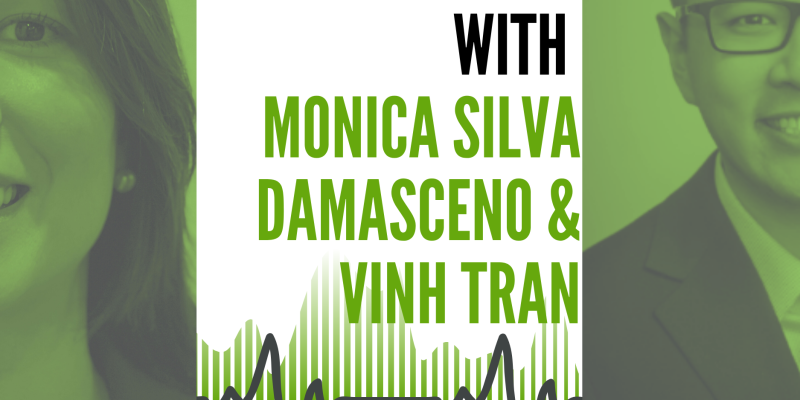
In this episode, co-hosts Dr. Leo Arguelles and Dr. Daniel Young sit down with Dr. Monica Silva Damasceno (MD Anderson Cancer Center) and Dr. Vinh Tran (University of New Mexico) — two clinicians who shared the stage at CSM’s ICU Rehab panel alongside Dale Needham, Jen Ryan, and Chris Wells.

Together, they unpack what’s changing in critical care physical therapy — from dismantling barriers and writing mobility into unit culture, to building true interprofessional collaboration that lasts beyond a single champion.

Monica shares her journey from Brazil to Houston Methodist’s Critical Care Fellowship, and how mentorship shaped her vision for ICU practice. Vinh reflects on his path from cardiac medicine to academia, bridging implementation science with bedside experience.

The conversation highlights the power of structure, communication, and persistence in advancing early mobility — especially in smaller hospitals where “doing more with less” is a daily reality.

Today’s Guests:

Monica Damasceno PT, DPT, CCS

monicasdapt@gmail.com

linkedin.com/in/monica-silva-damasceno-pt-dpt-ccs-03989965

Vihn Tran PT, DPT, PhD, CCS

https://www.linkedin.com/in/vinh-tran-169015200/

Guest Quotes:

15:25 Vihn “ I agree in the shorter duration just because by necessity, if they’re in the ICU, they’re medically unstable, right? So you’re limited on how aggressive you can be, although I do think we can be more aggressive than the average person thinks. So yeah, I think that seems reasonable to, to shorter sessions, but perhaps more frequently. With a caveat that there is potential out there to do longer sessions in certain really niche or precise circumstances.”

20:24   Advice for those therapists that working like the smaller kind of rural community hospitals that wanna kind of make a dent and or wanna start implementing more ICU rehab?

Vihn “ ..really, it’s not just a PT or rehab driven process, right. Like we in rehab can just flick a switch and all of a sudden this happens. It requires an extensive amount of collaboration between providers, nurses, techs, your own staff, your equipment managers. Everyone needs to be on board with what the overall aim is. So in order to really get the ball rolling first to me, like identify champions in, in allied communities. So whether it’s a nursing manager that potentially sees the value in early mobility, perhaps it’s a Mutually beneficial relationship where we can provide higher quality therapy or an earlier timeframe. At the same time, we can relieve some of the mobility tasks that nursing might have to do or help them do it in a more safe aspect.”

Monica “ ..having an agreement with your team and having the the champions. One from or  multiple people from different groups, a doctor, nurses, and then have a plan of what you see for your unit in the future with this, those people, and create your practices like every day. Cultivating that practice of mobility and encouraging and helping each other.”

29:06 Monica “ one of the strategies to try to encourage more mobility is asking. What is the mobility plan during the rounds? Any rounds you have to have an answer. Then, then you think about mobility.”

Rapid Responses:

 What’s your go-to karaoke song?

 Monica: “it is Mariah Carey. It’s song Mariah Carey. Always Mariah Carey. Yeah. Any song that I can find? Mariah Carey. Which is the hardest to sing. Can you imagine talking about the scales there?

Vihn: I’m from St. Louis and I love Nelly, so I just gotta go with Nelly.”

You know you work in acute care when…

Vihn: “ When you don’t care what you’re wearing in the work or how you look, I should say that way.”

Monica: “ The scrubs have extra scrubs, I would say and all. And also having the safety pins in your pocket to secure the lines.”

Links:

https://orcid.org/0009-0009-6275-4362

🎧 Connect with Our Hosts

Leo Arguelles (pronounced LEE-O R-GWELL-IS)

📧 largue2@uic.edu

🐦 Twitter: @LeoArguellesPT

Nicole Neveau, PT, DPT, NCS

📧 ngunder1@gmail.com

🔗 LinkedIn: Nicole Neveau

Danny Young, PT, DPT, PhD

📧 daniel.young@unlv.edu

🐦 X: @DLYoungDPTPhD

🌐 Bluesky: @dlyoungdptphd.bsky.social

🎧 Listen now on Spotify | Apple Podcasts

(Or wherever you get your podcasts)